Campaign News
Latest LATEST
‘Ticket Back Home’ campaign adds routes and subsidies to help voters cast ballots in local elections
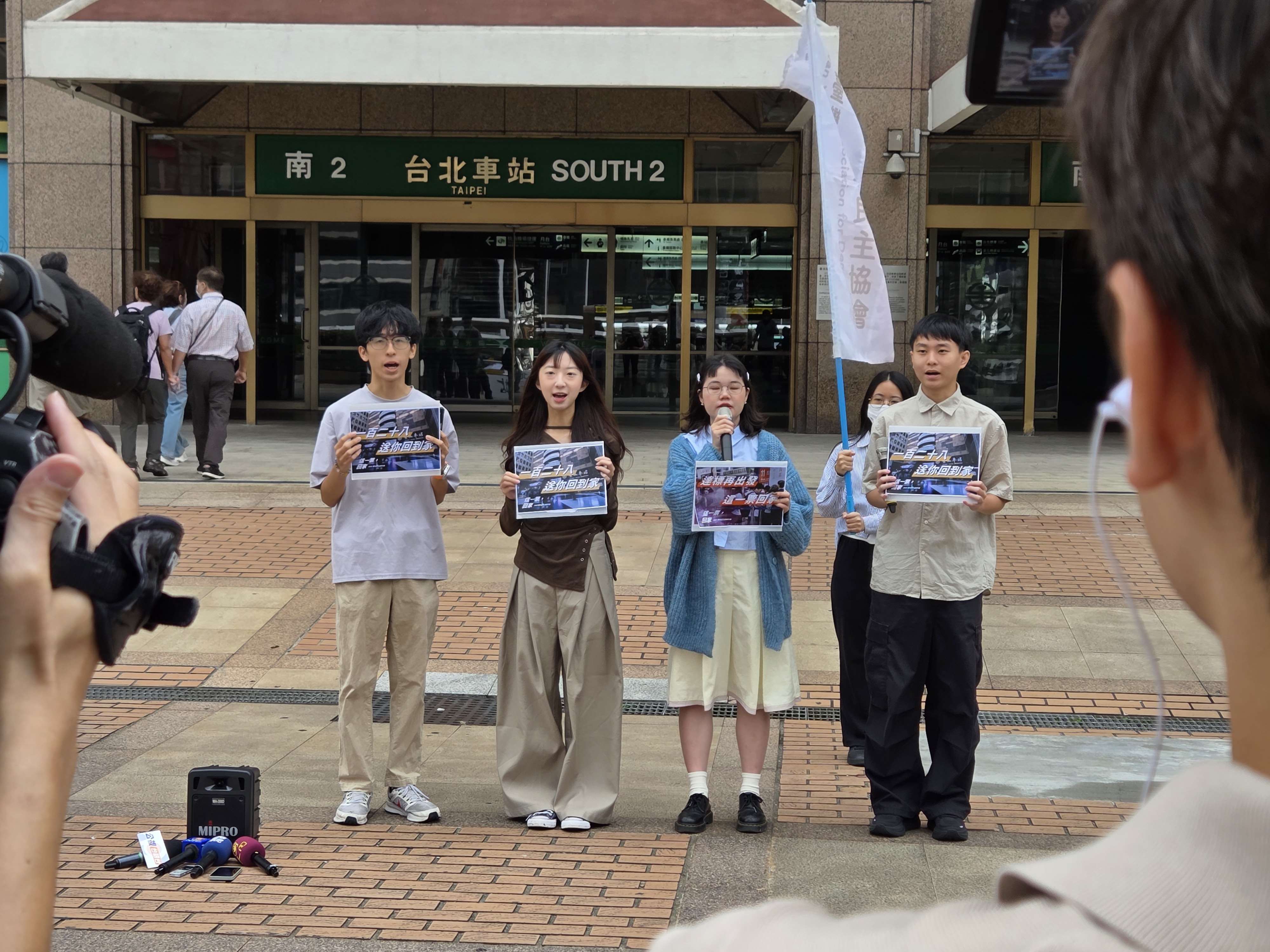
The Taiwan Youth Association for Democracy (TYAD) reached the crowdfunding goal for their “Ticket Back Home” project within nine days of going live, enabling the addition of 5-10 additional routes on top of the initially planned 25 routes eligible for a NT$128 (US$3.90) reimbursement. The project aims to lower the cost for people aged 18 to 35 to return home to cast their ballots. TYAD announced they have reached their NT$450,000 (US$13,700) crowdfunding goal at a press conference this Tuesday. Managing Director Alice Yang (楊姿潁) explained that the group decided to add more central-to-southern and southern-to-northern routes to meet demand; they are also adding a subsidy for ferry and plane tickets for eligible voters from Taiwan’s outlying islands. “First, purchase the NT$128 crowdfunding plan on the website. Next, the crowdfunding page will have an outlying island subsidy form you can fill out. After the election, send your ticket or an image of your ticket to our association for reimbursement. The specific amount is still under discussion, but we can confirm that we will give priority to students from low- and middle-income households,” Yang said. The second-phase crowdfunding goal is NT$800,000 (US$24,370), with the campaign running until November 21. Yang said there are still available seats on the first phase’s 25 routes and encouraged voters to check or purchase on the crowdfunding platform.

NGOs urge political parties to sign anti-deepfake pledge ahead of elections
Three Taiwanese fact-checking organizations have urged political parties, election candidates, and campaign teams to sign a pledge against producing or sharing deepfake videos. The call comes ahead of Taiwan’s local elections on November 28, amid concerns deceptive AI-generated content could influence voters. At a press conference held in Taipei on Thursday, October 29, the Taiwan FactCheck Center, MyGoPen, and Cofacts launched the voluntary agreement with support from nine other civic and industry organizations. The initiative draws on an Italian agreement signed by 14 political parties in 2025 and aims to proactively counter deepfakes, rather than simply debunk them or rely on legal action after they have been shared. The pledge calls on signatories not to create or distribute AI deepfakes that falsely portray political opponents saying or doing things they haven’t said or done. It also asks that they promptly remove any such content they mistakenly share and issue a correction on the same public channel in an equally prominent way. “Convincing deepfake videos and audio can be generated in seconds with a single click,” said Taiwan FactCheck Education Foundation Chairperson Huang Chao-hui (黃兆徽). Huang emphasized that the voluntary agreement does not prohibit AI-assisted campaigning or obvious satire, and carries no legal penalties. The NGOs said they would monitor deepfake use in the upcoming local elections and work on a cross-party mechanism before presidential and legislative elections in 2028.

Taiwan Equality Campaign updates PrideWatch voter guide ahead of local elections
With county and city mayoral elections now just one month away, the Taiwan Equality Campaign released an update on its PrideWatch voter guide this Tuesday, outlining candidates’ stated positions on gender equality across local jurisdictions. The platform hopes to ensure that gender inclusivity is genuinely reflected in everyday life. The campaign’s PrideWatch website, launched in 2018, has recorded more than 100,000 visits before each election over the years. The platform allows candidates to publicly declare their positions while enabling voters to hold them accountable. In the 2022 local elections, 245 candidates registered on the platform and 87 were ultimately elected as councilors. PrideWatch then actively contacted and met with the 87 elected councilors and mobilized local civic groups to establish annual gatherings for LGBTQ+ friendly councilors in eight major cities throughout Taiwan. During the past four years, these councilors have submitted at least 233 gender-related proposals and raised 104 inquiries in local councils, translating their pre-election pledges into local policies and legislation. The Taiwan Equality Campaign’s Executive Director Wong Wong (翁鈺清) announced that as of this Monday evening a total of 190 candidates had registered as gender-friendly for this year’s elections. She stressed that political choices affect everyone’s daily lives and reminded voters to pay attention not only to candidates’ policy promises before elections but also to whether those promises are implemented afterward.
China using scare tactics to influence Taiwan elections, MAC warns
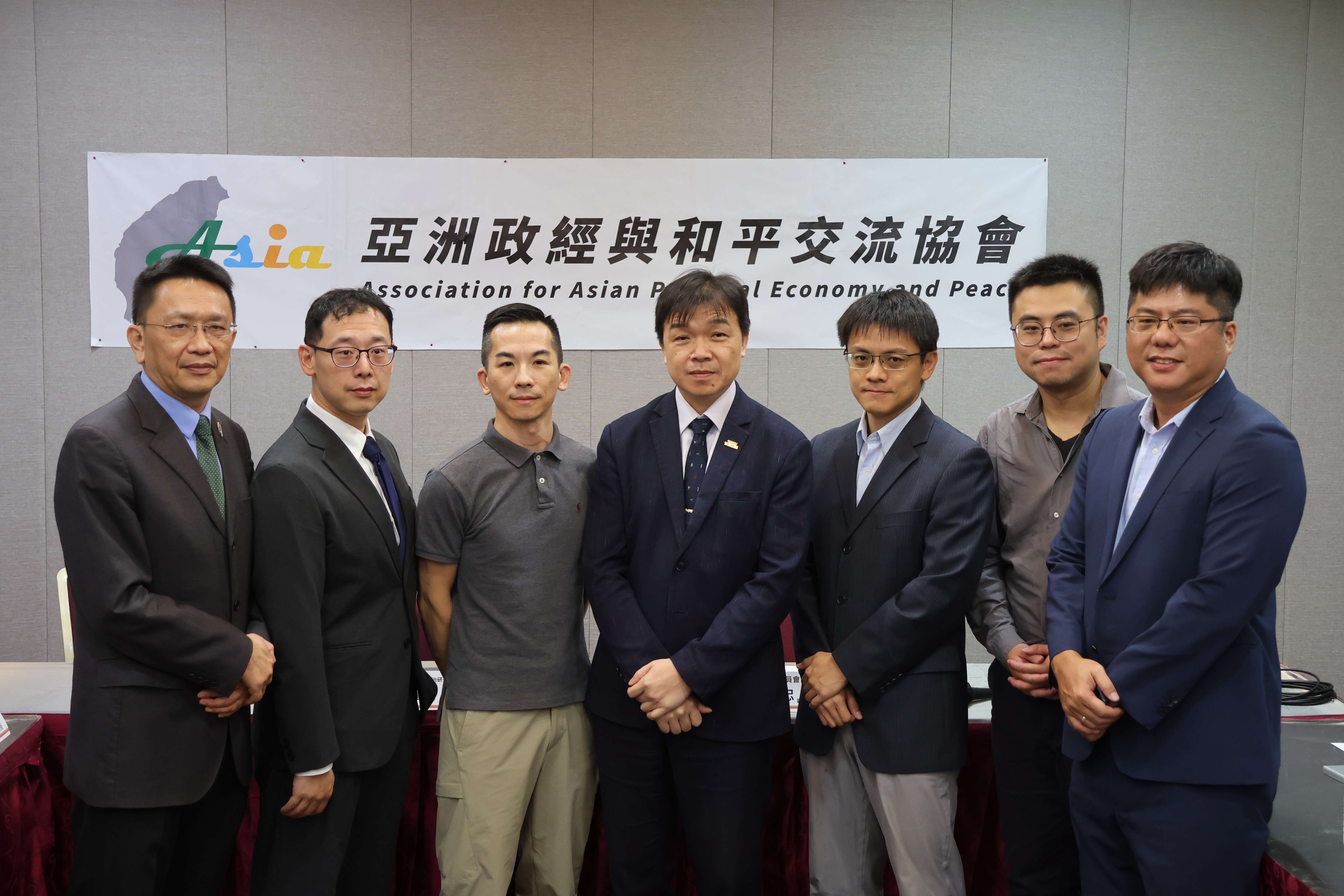
The Chinese Communist Party is increasingly using scare tactics to influence Taiwan's elections, targeting political opponents with “punishment and intimidation” rather than simply supporting favored candidates, the Mainland Affairs Council (MAC) warned Thursday, October 22. Deputy Minister Shen Yu-chung (沈有忠) made the remarks at a forum in Taipei organized by the Association for Asian Political Economy and Peace where scholars discussed Chinese election interference ahead of Taiwan's local elections next month. "Through this kind of punishment and intimidation of particular individuals and political parties, the CCP seeks to create a chilling effect in Taiwan, making voters afraid to openly support particular candidates or parties," Shen said. Shen cited punitive measures announced this month by China's Taiwan Affairs Office against a business belonging to the father of Taipei mayoral candidate Puma Shen (沈伯洋) and the denial of entry to China to the brother of Taiwanese businessman and political activist Robert Tsao (曹興誠). He also said Taiwanese television host Kevin Tsai (蔡康永) was criticized by a social media account affiliated with China's People's Liberation Army after participating in Puma Shen’s election activities earlier this month. The MAC deputy minister contrasted these measures targeting individuals associated with the DPP with the 10 economic incentives and other measures announced by China following KMT leader Cheng Li-wen's (鄭麗文) meeting with Chinese leader Xi Jinping in April.

Legislators warn against information manipulation ahead of local elections
Legislators from two major parties have warned against information manipulation ahead of the coming November local elections. Taiwan’s National Security Bureau (NSB) recently submitted a report to the Legislature which says that between January to September intelligence teams reported more than 2.5 million controversial messages spread by suspicious accounts. According to NSB statistics, Facebook’s share of the controversial messages rose from 43.6 percent to 68.9 percent, while Threads saw a rise from 4.5 percent to 9 percent. They cover topics including energy, food safety, and national defense policy, as well as specific candidates’ platforms, images, and local development projects. DPP legislator Rosalia Wu (吳思瑤) said in an interview on Wednesday, October 21, that the Chinese Communist Party’s (CCP) election interference methods keep changing and getting worse. She said the operations begin with Chinese state media and online outlets setting narratives that attack specific candidates. These are then repeated by some Taiwanese outlets, politicians, and pundits, which forms a cognitive warfare chain. Wu noted that the DPP candidate for Taipei mayor Puma Shen (沈伯洋) is a top priority of disinformation efforts, and urged the public to psychologically prepare for smear campaigns. KMT legislator Kin Cyang (黃仁) said CCP united front work and cognitive warfare against Taiwan have always existed and do not appear only around elections. He noted that AI-processed voices and images are already extremely lifelike, and that some people in Taiwan are using such technology. He called on elected representatives to be on guard and take precautions. The NSB said that in addition to information manipulation, government internet services faced an average of almost 2.6 million intrusion attempts per day, with an upward trend since June. The bureau said it cannot rule out that the CCP is gathering intelligence and preparing intrusions in order to interfere with November’s elections.
Mainland affairs minister warns against Chinese election interference
Mainland Affairs Council Minister Chiu Chui-cheng (邱垂正) said that the Chinese Communist Party is brazenly carrying out election interference ahead of local elections scheduled for November 28. He was speaking to reporters at the Legislature on Tuesday, October 20. Chiu said transnational repression and cognitive warfare are both clear signs of interference, and that misinformation could increasingly influence voters’ perceptions and behavior as the election nears. He called on the government and the public to join hands against election interference and safeguard a fair and impartial electoral environment. Chiu noted that Taiwan is tested in this way every year, and it takes the whole public and the government working together to defend the nation’s free and democratic constitutional order and its democratic way of life.

Scholar warns China’s election interference online ‘all-out attack’ to undermine democracy
China’s election interference has become an “all-out attack” online, with fake accounts even impersonating anti-China voices to deepen political divisions and undermine trust in democracy, a scholar warned Monday, October 19, ahead of Taiwan’s local elections next month. “The bigger ambition is to make you feel that the entire democratic system is unreliable and that dialogue is simply impossible,” said Shih Hsin University associate professor Liu Yu-hsi (劉玉晳) at a forum in Taipei organized by the DPP’s China Affairs Department. She suggested that Chinese interference had moved beyond simply supporting or opposing certain candidates. Instead China aims to “intensify confrontation” in Taiwan and “make you feel that elections are really unpleasant,” she said. Liu, who serves as a member of the Presidential Office’s Whole-of-Society Defense Resilience Committee, warned that AI had made fake social media accounts increasingly convincing, with some even posing as opponents of China to sow discord. “The CCP's online interference has become an all-out attack,” she said, adding that protecting Taiwan’s democracy means protecting “the entire atmosphere of discussion and democratic dialogue.” University of St. Thomas professor Yeh Yao-yuan (葉耀元) also said that China aims to “create mutual suspicion throughout society and gradually make people lose faith in their democratic system.” Yeh said manipulated news and AI-generated content circulating on YouTube and other social media platforms could leave voters making political decisions based on unreliable information. He suggested that if election results failed to match the choices voters believed they were making, they could become disillusioned with the democratic system itself.

Televised Taipei mayoral debate scheduled for October 31
The first televised debate for the 2026 Taipei mayoral election between KMT candidate Chiang Wan-an (蔣萬安) and DPP candidate Puma Shen (沈伯洋) has been confirmed for noon, October 31. Taipei’s current Mayor Chiang is running for reelection against Puma Shen, who currently sits as a legislator. The campaigns have so far been fraught with personal attacks, spying allegations, and high drama. However, both candidates were cordial, speaking about the upcoming debate, signaling they would be open to more than one, and discussing their preparations for the event. In a radio interview on Friday, Chiang said he plans to cover all that he’s achieved in his 4-year tenure and give a concrete blueprint for what he envisions the future of Taipei City to look like in the next one to two decades. He also said he’s open to additional debates in the future, pending arrangement. “We’ll wait for invitations from relevant organizers and media outlets, and coordinate with them on the details. This includes TVBS and SET TV, who organized the first debate, regarding timing, format, and so on – which all require negotiation. We’re open to the possibility [of another debate], and can work with any media outlets willing to host it.” Chiang said. Meanwhile, Shen stated that he is working on speaking concisely to explain his positions, as someone who typically talks for a long time. He said, “After discussing what to prepare for the debate, I realized that I sometimes speak for a long time. However, since each debate turn only lasts two to three minutes, I need to practice wrapping up my points in two or three minutes. I also need to practice shortening my sentences a bit so I don’t run out of time. That’s probably the most important thing.” He also mentioned that he doesn’t believe this practice will interfere with his campaign schedule, and he will continue with events as planned.
Mainland Affairs Council adjusts list of election candidates with prior Chinese household registration
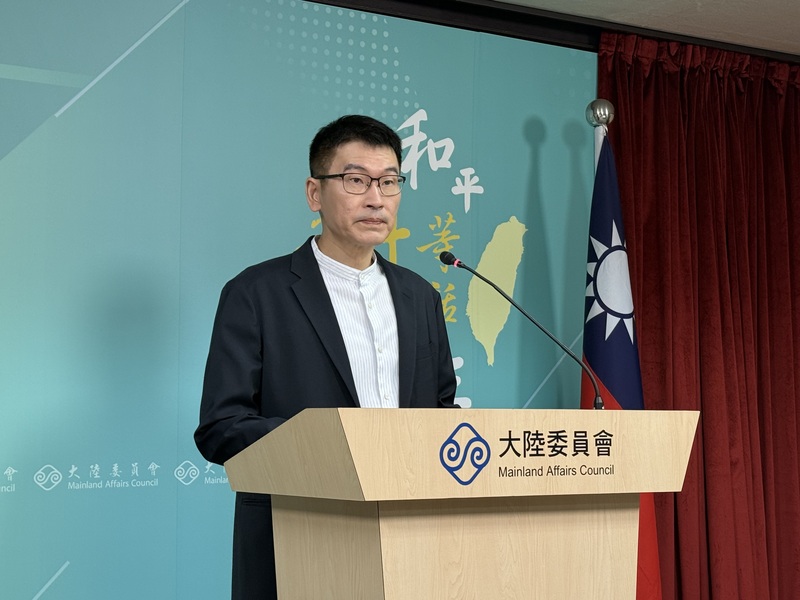
Taiwan’s Mainland Affairs Council (MAC) on Thursday, October 1, announced corrections to the list of 26 registered local election candidates, who had previously held Chinese household registration. MAC and the National Immigration Agency verified the candidate list and corrected the figure to 25, noting that one entry had been recorded erroneously. Moreover, MAC Deputy Minister and Spokesperson Liang Wen-chieh (梁文傑) stated that out of the 25 registered individuals, four had not submitted proof of having renounced their Chinese household registration, while another seven had submitted such proof but had not yet reached the required 10-year period since deregistration. Liang said that MAC’s policy position is clear: individuals must submit proof of renouncing their Chinese household registration at least 10 years prior in order to be eligible to run for office. He said that election authorities will make the final determination on candidate eligibility. They are expected to complete their review by October 17.
KMT Chairwoman says in speech at business club that only the KMT can lead Taiwan down the right path
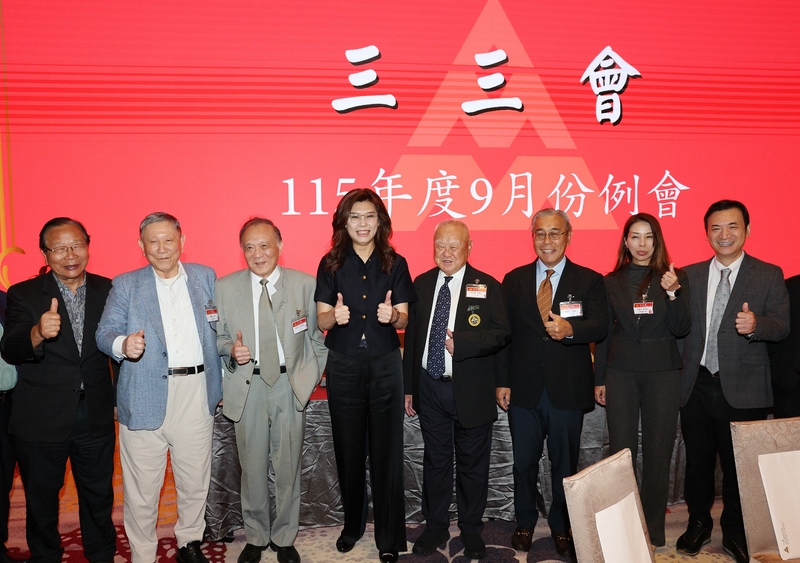
KMT Chairwoman Cheng Li-wen (鄭麗文) delivered a speech at the Third Wednesday Association this Wednesday on Taiwan’s choices amid an increasingly volatile international situation. She also reiterated that Taiwan should engage in dialogue with the mainland based on the 1992 Consensus, stating that only the KMT has what it takes to lead Taiwan down the right path. The Third Wednesday Association, whose members are mainly executives from major domestic companies and business leaders, invited the chairwoman to attend and speak at their meeting this month. Cheng said Taiwan is at a critical juncture in its history and should find a strategically important position from which it can exert influence, such as by seeking a role as an intermediary amid U.S.-China competition. She said this was also the purpose of her successive visits to China and the United States since taking office; during her communications in the United States, she said she emphasized that cross-strait dialogue is clearly in the interests of the U.S. and other countries. The chairwoman explained that, amid competition between the U.S. and China, Taiwan could potentially play various roles, including serving as a platform for dialogue, a buffer, or a facilitator. However, she said that these ideas could only come to fruition if the KMT wins not only the local elections at the end of this year but also the 2028 presidential election. According to Cheng, the key to resolving cross-strait issues is engaging in dialogue with the CCP based on the 1992 Consensus, the outcome of which is still hotly debated by the DPP. The KMT understanding of the consensus is “one China, different interpretations,” while the PRC’s position is that there is only one China and they do not formally acknowledge the “differing interpretations.” It is on the basis of this consensus that Cheng insisted only the KMT has what it takes to lead Taiwan down the right path.